
The challenge
Run an efficient fleet that moves with demand.
Fleet teams needed to work efficiently, balance workloads across operators, and redistribute bikes and scooters to match demand. Every recovery, relocation, battery swap, and repair also had to preserve vehicle history and meet local regulations.
My roleI led design across mobile, iPad, web, and vehicle hardware for fleet teams in 18 cities.

Turn citywide priorities into action on the street.
Operators could find nearby tasks and check vehicle status on the map. For missing bikes, recent activity showed when and where a rider last scanned the QR code.

Follow the job from pickup to drop-off.
Every shift meant coordinating pickups, repairs, battery swaps, and redeployments with limited time and van space. I brought assignments, carrying capacity, vehicle condition, and task history into one workflow, giving operators the context to move from one job to the next and return vehicles to service where they were needed.

Map system
See what needs attention.
I designed a visual hierarchy that made urgent work stand out across repairs, battery swaps, relocations, and missing vehicles. Dynamic grouping organized nearby vehicles into clusters as the map scale changed, preserving counts and priority cues before revealing individual vehicle details. Battery levels and drop-off zones added the context operators needed to decide where to act.

Fleet management
Coordinate vehicles, crews, and demand across the city.
I designed web tools for planning shifts, monitoring fleet demand, and defining service zones. A shared inventory brought vehicles, batteries, transport, and operators together, with a service history for each vehicle.


Warehouse tools
Get damaged vehicles repaired and back on the street.
The iPad app helped mechanics diagnose problems, track parts and labor, and maintain vehicle service histories. Component inspections separated resolved issues from work still needed.


Map the complete repair journey.
I mapped the repair state model from pickup through intake, repair, inspection, and redeployment. It exposed the decisions, unresolved issues, and handoffs each workflow needed to support.

Keep vehicles in service with battery swaps.
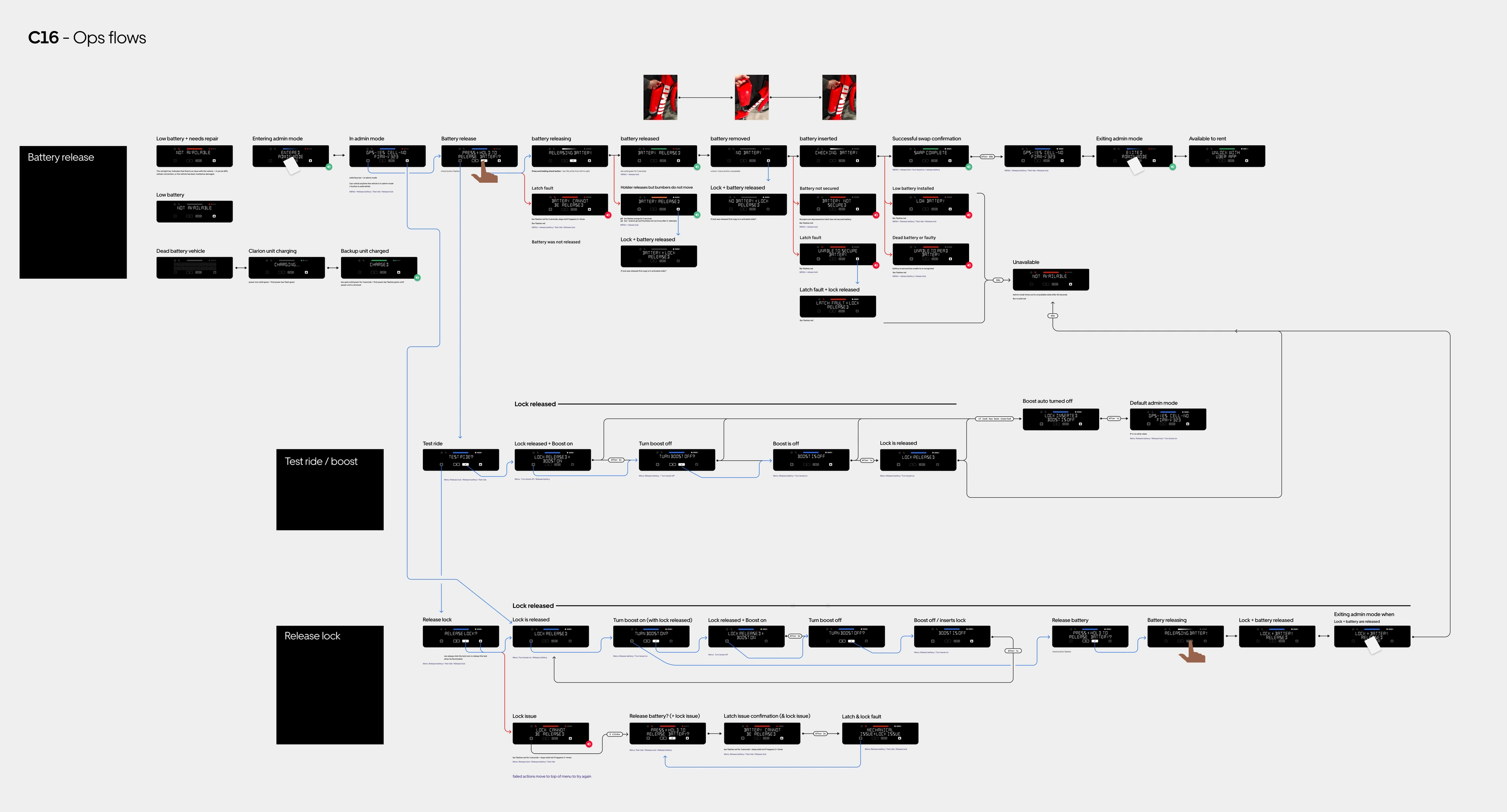
Swappable batteries changed far more than the hardware. I designed the flow across the vehicle, mobile app, and operations tools, including recovery paths for batteries that would not release or replacements that could not be used.
Connected hardware
Designed for next-generation hardware.
For sign-in, battery release, locks, and test rides, the app’s feedback had to match the hardware. Success, waiting, and fault states helped operators understand what had happened and what to do next.


Recover.Repair.Return to service.
I led design across all surfaces that helped fleet teams keep bikes and scooters moving in 18 cities.
The work contributed to
- Beforecost per touch
- Afterprofit per touch